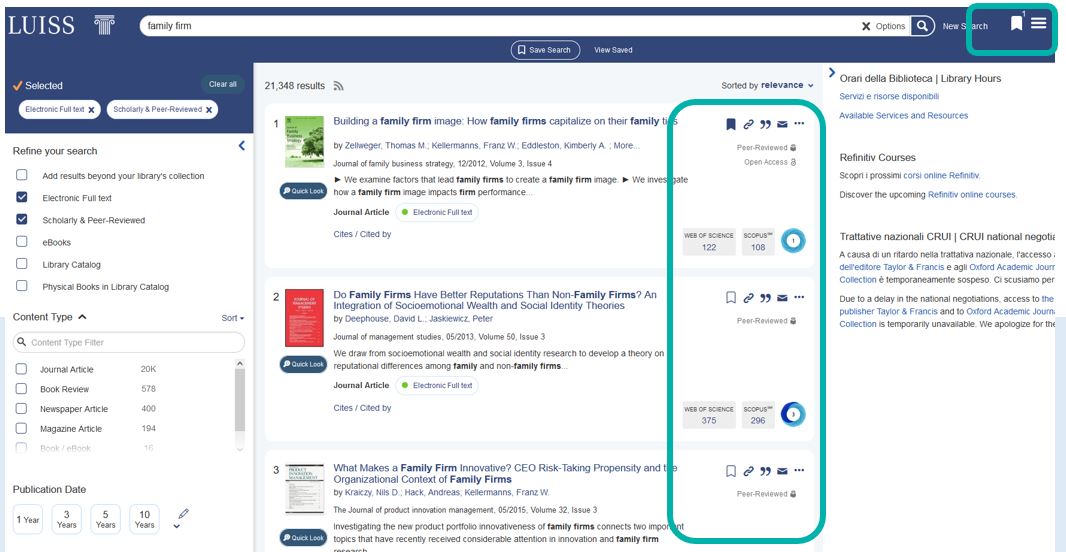
The Luiss Library Discovery is the primary tool for locating or directly accessing the Library's documents.
If you don't have a list of citations to start with, the search engine can be a valuable tool to enrich your research, even by starting with a simple search. Identify keywords, including in English or other languages, and this will guide you in defining the topics of interest.
What kind of material are you looking for? Books, manuals, or journal articles? Financial or statistical data? Having a clear idea of the types of documents you need is essential when choosing which sources to use.
Open Discovery and remember to use Boolean operators, filters, and the other categories suggested by the search engine.
Once you have the list of results, take a look at the information provided by the system.
The results are automatically sorted by relevance, but you can customize the parameter.
Each result can be:
- saved to a personal temporary folder;
- shared via a permalink;
- exported as a bibliographic citation in a specific format;
- sent via email.
Discovery also indicates whether the publication is peer-reviewed and the number of related citations.
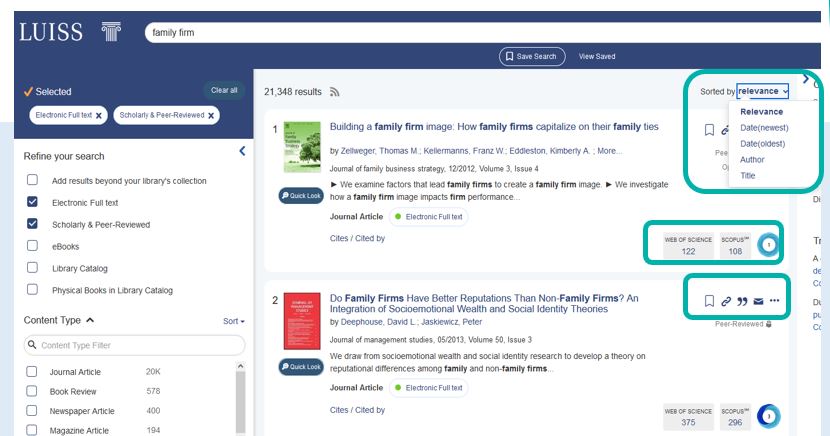
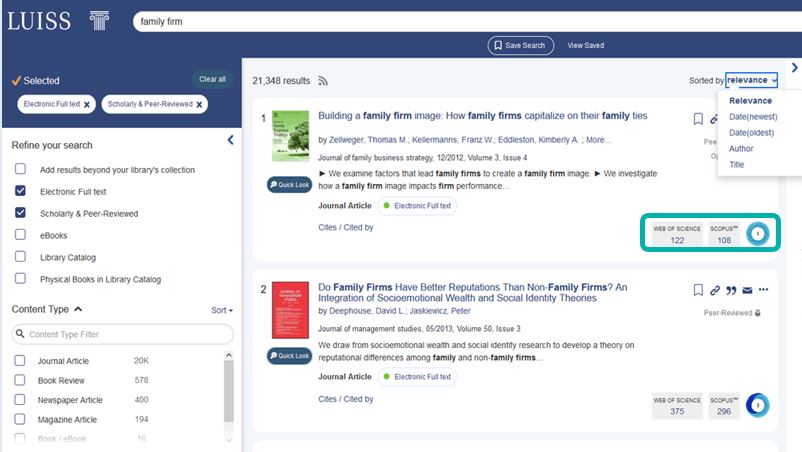
It can also indicate citations in:
- Web Of Science, which provides the best journals for retrieving high-value scientific literature;
- Scopus, which offers authoritative search capabilities and provides access to bibliometric assessment tools;
- Altmetrics, which shows how much attention a particular research paper has received online.
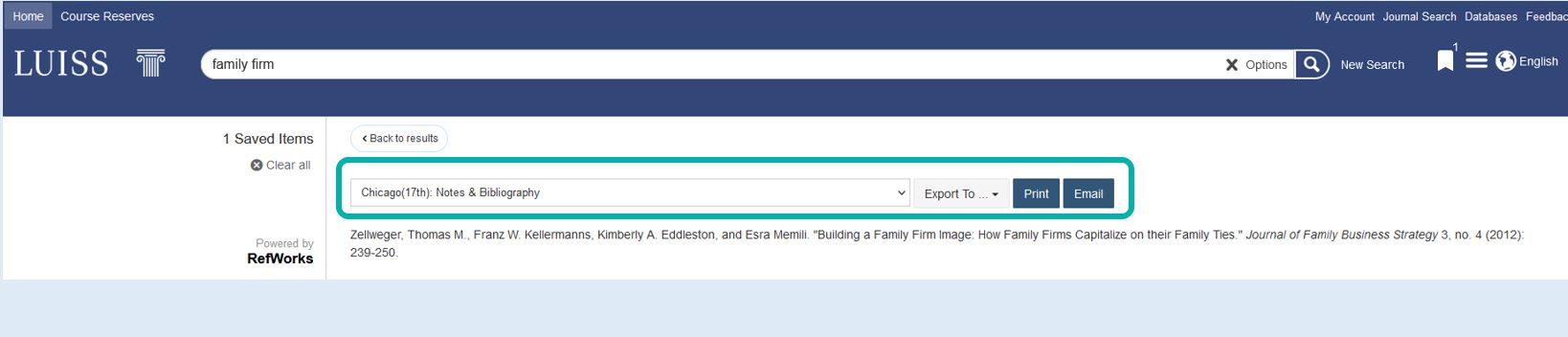
Once saved in the folder at the top right, the results can be exported as citations in a specific style.
You can choose your preferred citation style and export the titles, or you can simply copy and paste them into your own document.